Inclusive Resources
There is a wide variety of diverse resources and books to support inclusion. The information on the related pages provides only a sample of ideas for inclusive and diverse resources, through a combination of links to books, websites and videos to support Early Years Providers in creating an inclusive, diverse environment for the children in their provision.
- Resources can be found in a variety of places
- Resources do not need to cost a lot of money
- Resources can be everyday objects, bought from a charity shop or recycled from another source
English as an additional Language (EAL)
The Early Years Foundation Stage statutory guidance states that ‘For children whose home language is not English, providers may take reasonable steps to provide opportunities for children to develop and use their home language in play and learning, supporting their language development at home.
If a child does not have a strong grasp of English language, practitioners must explore the child’s skills in the home language with parents and/or carers, to establish whether there is cause for concern about language delay.’
(EYFS 2024 p16)
Understanding the steps of learning for children with EAL EMAS 21.3.17
English as an additional language (EAL) from DfE
Guiding Principles for EYFS on EAL, The Bell Foundation
ESOL Resources for younger children with EAL
Language template form for use with children and families with EAL
The following resources may support practitioners to support children and families with EAL
Guidance Tools
- Help for early years providers : English as an additional language (EAL) (education.gov.uk)
- EAL Assessment Framework - The Bell Foundation (bell-foundation.org.uk)
Video supporting children with EAL
Penn green
Flash Academy Uk number 1 EAL platform
5 Tips to support children with EAL
Tapestry
Books for Practitioners on supporting children with EAL
For visual supports strategies and templates please follow this link https://www.nottinghamcity.gov.uk/earlyyears/section-pages/equality-and-inclusion/support-strategies-for-children-with-send/
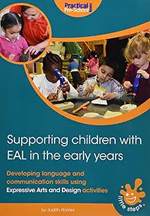 |
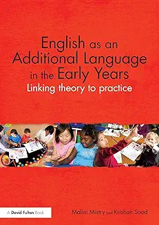 |
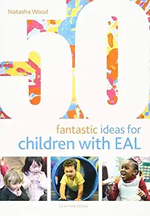 |
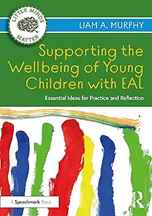 |
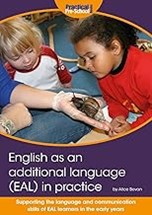 |
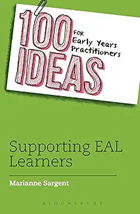 |
Supporting children with EAL for Early years practitioners
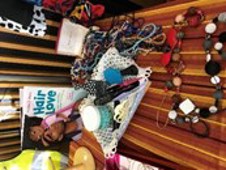
Resource Ideas from Charity shops and Books for practitioners on working with children who have English as an additional language.
|
|
|
|
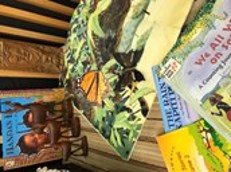
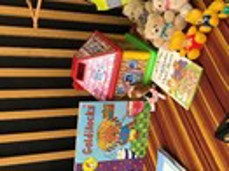
“Children and adults who have difficulty understanding and speaking often become frustrated or withdrawn. Young children may communicate this through behaviours such as screaming and kicking; older children and adults may shout or hurt themselves. By using Makaton, we are helping them to communicate in a more acceptable way.” The Makaton Charity
Here are five top tips for using Makaton:
- · Using Makaton is fun!
- · Use signs and symbols as much and as often as you can.
- · Always speak as you sign or use symbols.
- · Offer lots of encouragement.
- · Don't give up! It may take a while but it is worth it in the end.
It is important that only a few signs and symbols are used at the beginning. These will be the most important ones for the child or adult with communication difficulties. They will be chosen by the people who know the child or adult best. As they learn, more words will need to be introduced.